Commercial Roof Surveys: What Buyers, Landlords and Asset Managers Should Inspect
Commercial roof surveys should assess more than whether water is entering today. Buyers, landlords and asset managers need to understand roof type, visible condition, drainage, penetrations, remaining life, previous repairs and the likely timing of capital expenditure, or an expensive Dilapidation Claim at the end of a lease. Flat membranes, profiled metal roofs, asbestos cement sheets, gutters and rooflights each have different risks. Safe access, asbestos information and operational constraints must be considered before anyone assumes the whole roof can be walked or closely inspected.
Flat and membrane roofs
Check ponding, blisters, splits, open laps, upstands, outlets and penetrations. Local patches can indicate recurring problems but do not necessarily mean full replacement is due. Core samples, electronic leak detection or manufacturer advice can be proportionate where remaining life is critical to an acquisition decision.
Metal and sheeted roofs
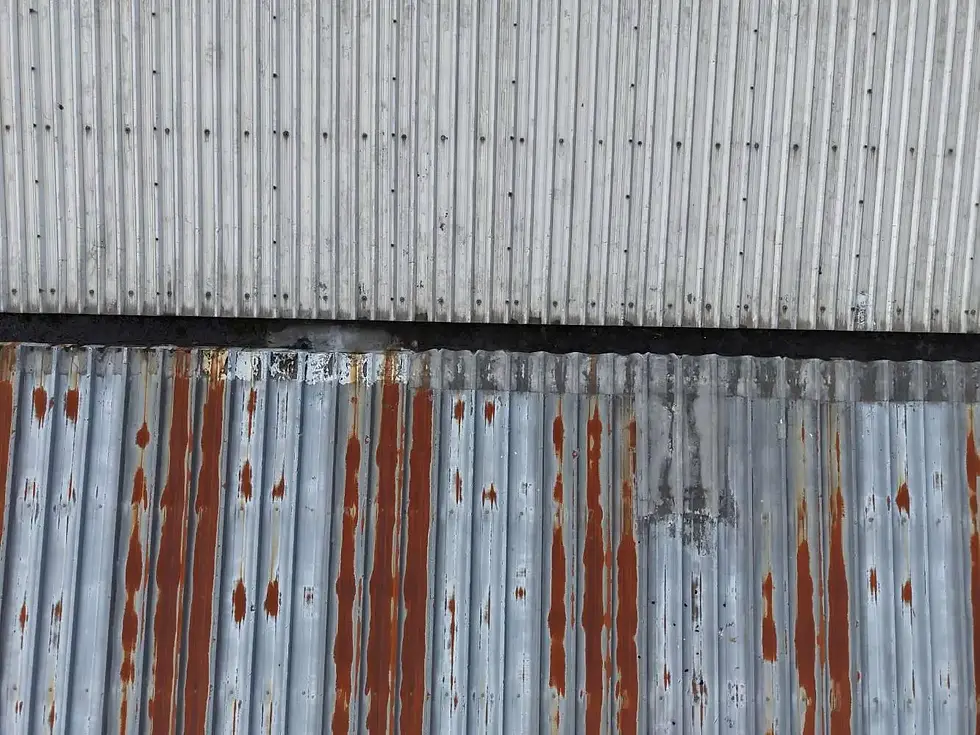
Profiled metal roofs can suffer coating failure, corrosion at cut edges and fixings (known as Cut Edge Corrosion), failed sealants and leaking rooflights. Older sheeted roofs may contain asbestos cement. The asbestos register and management plan should be reviewed, and intrusive work must be planned accordingly. A building survey is not an asbestos survey.
Gutters, valleys and drainage
Large commercial roofs concentrate substantial water flows. Box gutters, valley gutters and internal outlets can cause major internal damage if blocked or undersized. Surveyors should check visible falls, corrosion, debris, overflow evidence and discharge routes. Access for routine cleaning is part of the maintenance risk.
Budgeting and transaction risk
The report should separate urgent leaks, short-term repairs and longer-term replacement. For acquisition or lease decisions, repair responsibility must be considered alongside the legal documentation. A roof with five years of remaining serviceable life may still require a major capital allowance even if no leak is present at inspection.
Roof survey types
Drone Roof Surveys
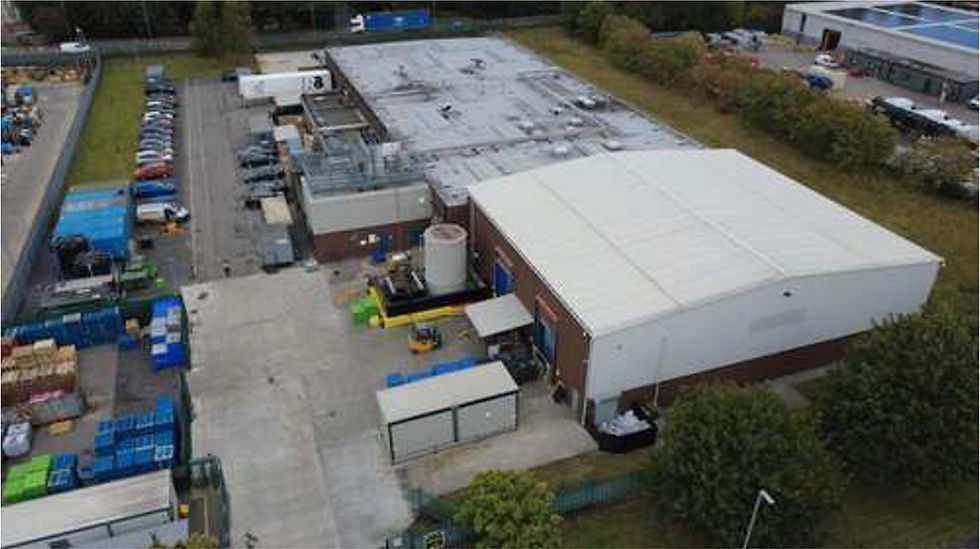
Drone roof surveys provide a safe, efficient and cost-effective way to inspect commercial roofs, particularly where access is difficult, restricted or potentially hazardous. High-resolution aerial photography and video can be used to assess roof coverings, flashings, gutters, parapets, rooflights, plant areas and other elevated elements without the need for extensive access equipment. Drone surveys are particularly useful for large industrial, warehouse and commercial buildings, allowing significant roof areas to be inspected quickly while minimising disruption to occupiers. The imagery also provides a clear visual record of defects such as slipped or damaged coverings, ponding water, deterioration to seals and junctions, corrosion and areas requiring further investigation.
MEWP / Cherry Picker Roof Surveys
Where closer physical inspection is required, a Mobile Elevating Work Platform (MEWP), commonly referred to as a cherry picker, can provide surveyors with direct access to roofs, elevations and high-level building components. This allows defects to be inspected at close range, materials to be examined in greater detail and areas that may not be fully assessed from drone imagery alone to be investigated. MEWP access can be particularly beneficial when assessing cladding, parapets, rainwater goods, roof edges, structural components and localised defects where determining the extent or likely cause of deterioration requires a closer inspection. It can also allow limited non-destructive testing, measurements and detailed photography to be undertaken where appropriate.
Related AMS SURVEYS guidance
Authoritative guidance
Frequently asked questions
Can a commercial roof survey be done by drone only?
Drone imagery can help, but internal evidence and safe close access can add important information.
Does a roof survey include asbestos sampling?
No, unless a separate appropriate asbestos service is commissioned.
Can remaining life be exact?
No. It is a professional assessment based on visible condition and available evidence.
Should tenants inspect the roof before lease completion?
Yes, where roof liability may fall within the lease or service charge.
How AMS SURVEYS can help
AMS SURVEYS undertakes commercial building and roof surveys for acquisition, lease and asset-management decisions. Need advice on this issue? Request a quote for Commercial Building Surveys from AMS SURVEYS.