


%204K%20AMS%20SURVEYS%20LOGO.png)


Buying a House in the UK 2026: Could Cost You Thousands More
Buying a house UK
Every surveyor I know has a story like this. A buyer rings up three weeks after completion, and you can hear it in their voice before they even explain the problem. They've found damp behind the wardrobe. Or a crack that wasn't there on viewing day. Or a roof that "just needs a bit of pointing" according to the seller, but is actually held together with hope and old flashing tape.
None of this is unusual. It happens constantly. And almost every time, the buyer says the same thing: nobody told them a home survey could have picked this up.
So let's talk about it properly.
What a survey actually is (and what it isn't)
A lot of buyers think their mortgage valuation counts as a survey. It doesn't. Not even close.
A valuation is done for the lender, not for you. Its only job is to confirm the property is worth roughly what you're paying for it, so the bank isn't lending against something worthless. Nobody's crawling into the loft. Nobody's checking the wiring. Nobody's looking behind that suspiciously fresh bit of plaster in the corner of the bedroom.
A proper RICS home survey is a different thing entirely. It's carried out by a qualified surveyor whose only job is to tell you, honestly, what state the property is really in. Not what the estate agent's photos suggest. Not what the seller mentions in passing. What's actually there.
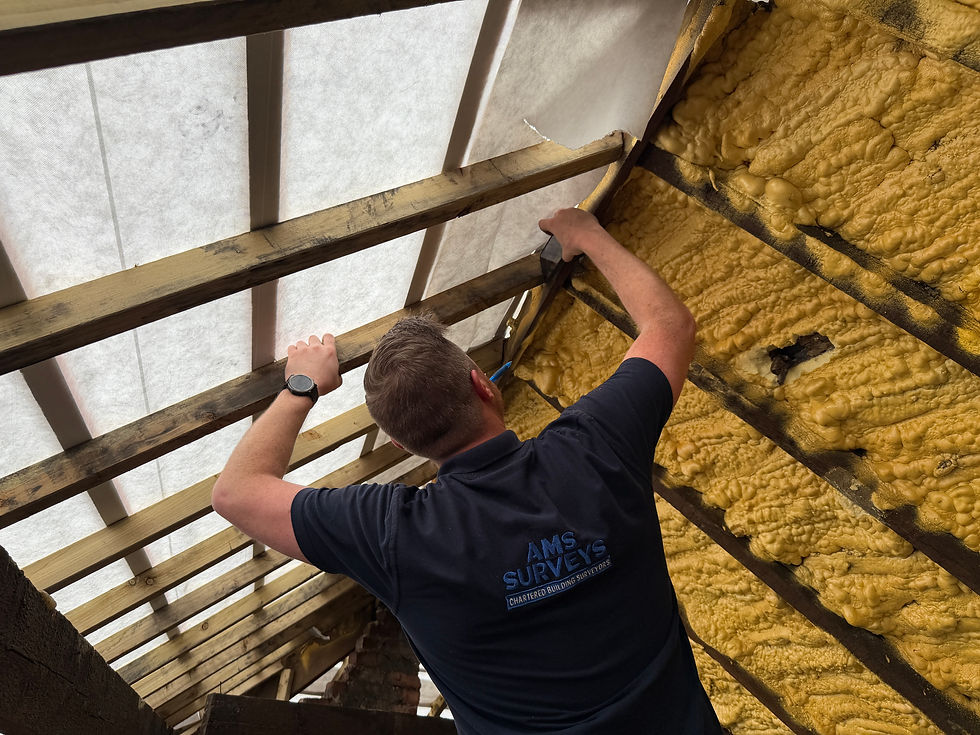
Why buyers skip it (and why that usually backfires)
Money's tight when you're buying a house. Stamp duty, solicitor fees, removal costs, a deposit that's already stretched thin. So when a survey shows up as an "optional extra," it's tempting to think you can manage without it.
But here's the thing. A survey typically costs a few hundred pounds. The kind of issues it uncovers, such as damp, roof problems, or structural movement, can run into five figures to put right. That maths doesn't take long to work out.
I've seen buyers skip the survey on a house that "looked fine," only to discover subsidence six months later. I've seen first-time buyers walk into a Victorian terrace with no idea the wiring hadn't been touched since the 1970s. These aren't rare edge cases. They're Tuesday.
When you genuinely need one
Short answer: almost always. But some situations make it non-negotiable.
Older properties. Anything built before the 1980s has had decades to develop problems, some visible, most not. Damp, movement, outdated services. A Level 3 Building Survey earns its keep here.
First-time buyers. If you've never owned a property before, you probably don't know what "normal" looks like versus what's a genuine warning sign. A survey translates that for you in plain English.
New builds. Yes, really. New doesn't mean perfect. Snagging issues, rushed finishing, poor insulation installation. I've reported on new-build homes with more defects than houses three times their age.
Auction properties. This one catches people out badly. Once the hammer falls at auction, you're committed. There's no cooling-off period to get a survey done afterwards. It has to happen before you bid, not after.
What actually turns up in these reports
People are sometimes surprised by how much a survey can reveal about a house they thought they knew. Common findings include:
Damp, whether it's rising through the walls, coming in through the roof, or building up from poor ventilation
Roof issues that aren't visible from the ground, like slipped tiles or rotting timbers
Structural movement, cracks that suggest something's shifting rather than just settling naturally
Poor or missing insulation, which hits you later through energy bills
Alterations or extensions that were never signed off properly
None of this tends to show up on a walk-round viewing. But often it's exactly why one buyer walks away and another negotiates the price down by thousands.

The financial angle nobody talks about enough
This is the part that surprises people most. A survey isn't just about avoiding disaster. It's a negotiating tool.
If the report flags a problem, you've got documented, independent evidence to take back to the seller. That's very different from saying "I think the roof looks a bit off" during a viewing. You've got a professional assessment in writing.
Buyers use this to knock money off the asking price. Or to ask the seller to fix the issue before completion. Or, sometimes, to walk away entirely from a house that looked perfect but wasn't.
I've seen surveys that cost £500 lead to price reductions of £8,000 or more. That's not a rare outcome. It's fairly typical when a serious issue turns up.

Level 2 or Level 3? Here's the simple version
Buyers overthink this more than they need to.
A Level 2 Homebuyer Report suits a fairly standard, modern property in reasonable condition. Conventional construction, nothing unusual, no obvious red flags. It'll flag the main issues without going into forensic detail.
A Level 3 Building Survey is for older, larger, or altered properties, or anywhere you're already a bit uneasy. It goes much deeper, and it's the better choice if you're planning renovation work afterwards too.
If you're not sure which one fits your purchase, ask. A quick chat with a surveyor beforehand costs nothing and saves you picking the wrong one (0151 314 6650).
The mistakes I see again and again
Relying purely on the mortgage valuation is the big one. People assume it covers them. It doesn't, and it was never designed to.
Skipping the survey to save a few hundred pounds is another. Understandable when funds are tight, but it's usually the most expensive shortcut a buyer can take.
And misreading the report itself. Survey findings are often graded on a simple rating system, and it's easy to skim past a serious flag buried in a long document. Worth reading properly, or asking your surveyor to talk you through it.
Why it's worth having someone independent in your corner
Your surveyor isn't working for the seller. Isn't working for the estate agent. Isn't trying to get the sale over the line. They're working for you, and that's exactly the point.
Buying a house is one of the biggest financial decisions most people make in their lifetime. Having someone qualified tell you honestly what you're getting into, before you're legally tied to it, isn't a luxury. It's just sensible.
A grounded final word
Every buyer wants to believe the house they've fallen for is the one. And most of the time, that's fine. But even the properties that look flawless can be hiding something the untrained eye simply won't catch.
A survey doesn't stop you buying the house. It just means you're buying it with your eyes open, and with a bit of leverage if something needs fixing.
If you're weighing up whether a Level 2 or Level 3 survey is right for your purchase, get in touch with our RICS surveyors or get an instant quote. We'll talk you through it honestly, no pressure, just straightforward advice from people who've seen a fair few houses.

FAQs
Do I have to get a survey by law when buying a house in the UK? No, it isn't a legal requirement. But going without one leaves you exposed to costs you didn't see coming.
Isn't a mortgage valuation enough? No. A valuation is for the lender's benefit, checking the property's worth the loan. It won't tell you anything about the actual condition. AMS Surveys also offer independent Red Book valuations, which are a separate service to a condition survey.
How much does a survey cost? It varies depending on the property's size, age and the level of survey. But it's a small outlay compared with what an undiscovered defect could cost to fix. You can get a tailored price through our instant quote tool.
Can I use survey findings to negotiate the price? Yes, and it's one of the most effective ways to do it. A written, independent report carries far more weight than a verbal concern.
What's the real difference between Level 2 and Level 3? Level 2 suits standard, reasonably modern properties. Level 3 is for older, larger or altered homes, or anywhere you want a deeper look.
Do new builds really need surveying? Yes. Snagging issues and construction shortcuts are more common than people expect, even in brand new homes.
What if the survey finds something serious, like damp or a cracked wall? You've got options. Renegotiate the price, ask the seller to fix it before completion, or in some cases, walk away. If damp or timber issues turn up, our damp and timber survey team can give you a clearer picture of the cause and cost. For cracking or movement, a structural inspection will tell you whether it's cosmetic or something more serious like subsidence.
How long does it take to get the report back? The inspection itself usually takes a few hours depending on the property, with the written report following within a few days.
Keyword List
Primary keywords: buying a house UK, house survey UK, RICS survey
Secondary keywords: Level 2 survey, Level 3 survey, property survey cost, house price negotiation after survey, homebuyer report, building survey UK, damp survey, structural survey, subsidence, roof survey
Internal Links Used
home survey / RICS home survey
movement / structural inspection
issues / roof survey
2 Homebuyer Report
3 Building Survey
Book valuations
in touch / contact
an instant quote


