%204K%20AMS%20SURVEYS%20LOGO.png)

Mortgage Lenders Are Increasingly Requesting Spray Foam Floor Insulation Surveys

AMS Surveys is seeing an increase in enquiries where mortgage lenders and valuers are requesting specialist surveys of spray foam floor insulation, not only the more widely reported spray foam insulation applied to roof structures. This suggests that lender concern is extending beyond roof spaces and towards the wider long-term effects of spray foam products when they have been poorly specified, incorrectly installed or applied in locations where the condition of structural timber cannot be adequately inspected.
Why are mortgage lenders concerned about spray foam insulation?
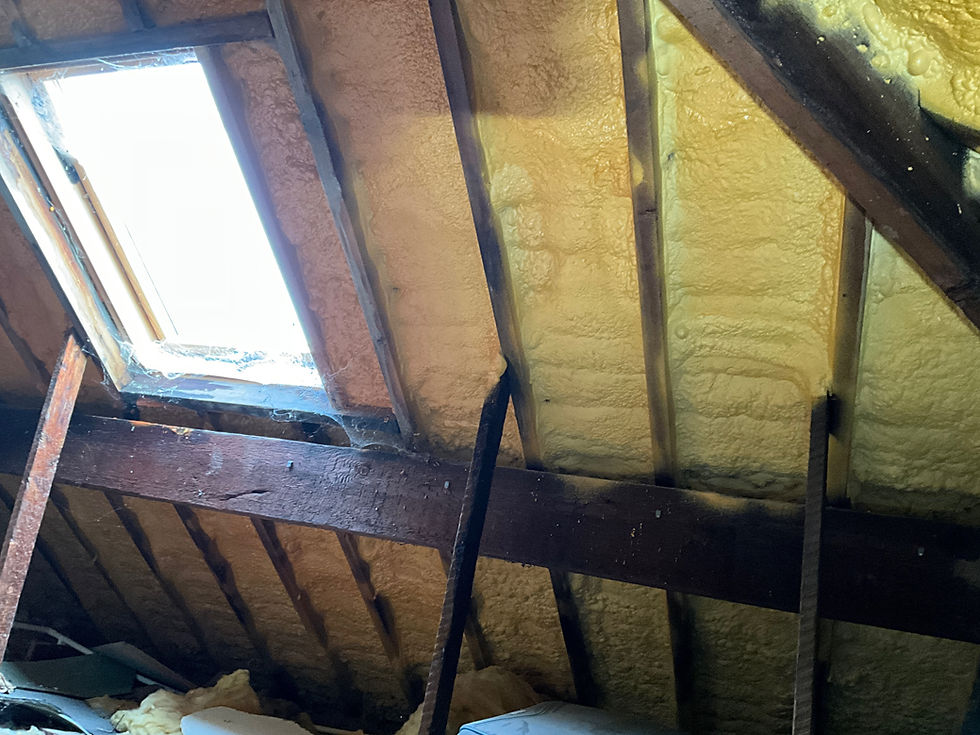
Spray foam insulation can conceal the surfaces of timber joists, floor structures, rafters and roof timbers. Where the product has been applied directly to timber, or where ventilation and moisture movement have not been properly considered, it may make it difficult to assess whether the timber is dry, adequately ventilated and free from decay. The presence of spray foam does not automatically mean that a property is defective or unmortgageable, but lenders often require further evidence before they can understand and accept the risk.
The key issue is not simply the existence of insulation. It is whether the installation was suitable for the building, whether the correct product and method were used, whether moisture was already present, whether ventilation was maintained and whether the hidden timber remains in satisfactory condition.

Spray foam beneath floors can create similar risks to roof installations
Spray foam used within suspended timber floors, between joists or against the underside of floor structures may restrict inspection and reduce airflow around vulnerable timber. Suspended timber floors commonly rely upon effective subfloor ventilation to control moisture. Where insulation bridges ventilation paths, is applied against damp timber or conceals defects, the conditions can increase the risk of fungal decay, timber rot and deterioration of joist ends or other concealed structural components.
Poor workmanship can also leave voids, irregular coverage and inaccessible areas where condensation or moisture may remain undetected. In some cases, the insulation can hide the very defects that a mortgage valuation or building survey is intended to identify.
What does a lender-requested spray foam survey involve?
A specialist spray foam insulation survey should consider the location and apparent type of foam, the condition and accessibility of the surrounding construction, evidence of moisture, ventilation provision, visible timber condition and any documentation relating to the installation. This may include installer details, guarantees, product certification, design information and evidence that the installation was appropriate for the building.
The extent of the inspection will depend on access. Spray foam can prevent a complete visual assessment of concealed timber, so further investigation or localised opening up may sometimes be necessary. Where timber decay is suspected, additional testing or specialist contractor input may also be recommended.
Will spray foam insulation affect a mortgage or sale?
Mortgage lenders apply different criteria. Some may accept a suitably detailed survey and supporting installation records. Others may require further investigation, remedial work or removal before lending. Property owners should not assume that a guarantee or installer certificate will automatically satisfy a lender, particularly where the timber structure cannot be inspected, or the installation appears inconsistent with the building's ventilation and moisture requirements.
The increase in requests concerning spray foam floor insulation indicates that lenders are taking a broader view of the potential risks. Their concern appears to focus on long-term building performance, the possibility of concealed timber decay and the difficulty of confirming the condition of structural elements following installation.
Arrange a spray foam insulation survey with AMS Surveys
AMS Surveys provides independent spray foam insulation surveys for homeowners, buyers, sellers and mortgage lending requirements. Our surveyors assess spray foam installations within roof spaces and, where accessible, floor structures, considering visible defects, moisture risks, ventilation and the condition of surrounding timber.
Where a mortgage lender, valuer or solicitor has requested a specialist report, provide AMS Surveys with the wording of the request so the scope can be tailored to the information required. To request a quotation, visit www.amssurveys.co.uk, email contact@amssurveys.co.uk or call 0151 314 6650.