


%204K%20AMS%20SURVEYS%20LOGO.png)
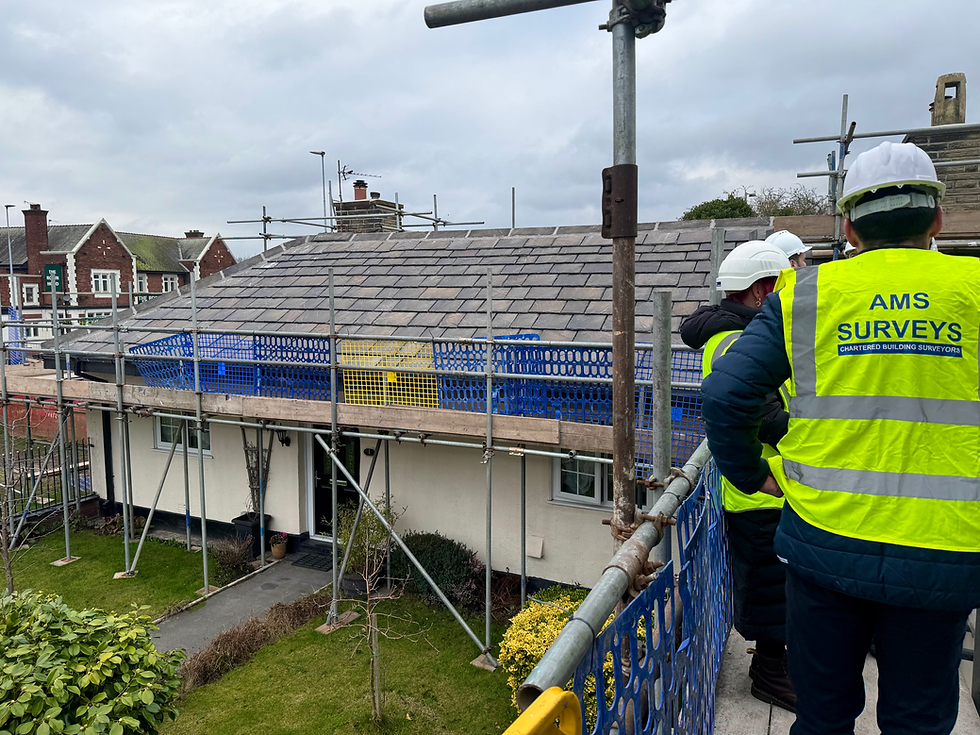
Professional residential, commercial and heritage property surveys across North Wales, with clear reporting, practical advice and specialist building pathology support.
RICS CHARTERED BUILDING SURVEYORS & ENGINEERS IN NORTH WALES
RICS Regulated & Chartered Surveyors
Clear Reports in Plain English
Fast Turnaround Times
Local Knowledge You Can Trust
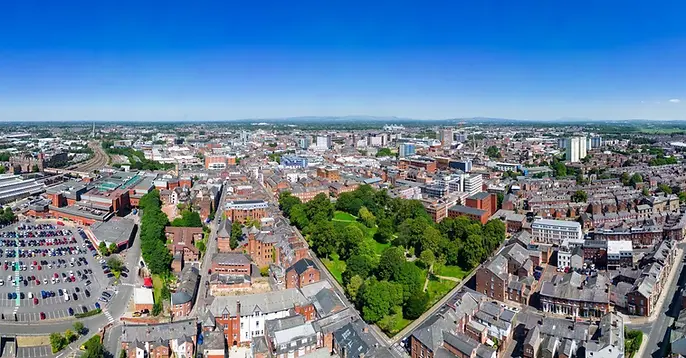


LOCAL KNOWLEDGE YOU CAN TRUST IN NORTH WALES
Our work in North Wales spans Residential, Commercial and Heritage surveying, with specialist support where a standard survey is not enough. The wider area contains a broad range of property ages and construction types, so the survey scope should be matched to the individual building. Coastal exposure also means external finishes, roof coverings, metalwork and rainwater goods deserve careful attention. Traditional stone walls and slate roofs behave differently from modern cavity construction and need compatible repair materials. This makes it important to choose the survey level and investigation scope around the actual construction, age, alterations and condition of the property.
SERVICES WE OFFER IN NORTH WALES


Subject to Area

1
Request a
Quote
2
Choose the Right Survey
3
Survey Inspection
4
Receive Your Report
5
Discuss Findings With Your Surveyor
WHY CHOOSE AMS SURVEYS IN NORTH WALES?
Property in North Wales varies considerably in age, construction and previous alteration. Our surveyors combine RICS-regulated professional standards with building-pathology experience so the report explains not only what is visible, but why it matters and what should happen next.
North Wales Property Expertise
Across Wrexham, Flintshire, Mold and Conwy, we encounter stone cottages, Victorian terraces, slate-roofed houses, rural farmhouses, coastal homes, bungalows and modern estates. Our inspections are tailored to those differences rather than relying on generic wording. Damp, roofs, structural alteration and drainage remain recurring themes, but the significance varies with construction type and age. Exposure to prevailing weather can accelerate deterioration of pointing, render, roof edges, flashings and external joinery. Hard cement pointing, blocked ventilation and moisture trapped within solid masonry are recurring causes of deterioration in traditional buildings.
Property across North Wales, including Wrexham, Flintshire and Mold, covers a wide spread of ages and construction types. A RICS Level 2 Home Survey can suit a conventional home in reasonable condition, while older, larger, extended, non-standard or visibly defective buildings often justify a Level 3 Building Survey. The inspection level should follow the building, not simply its purchase price or postcode.


In North Wales, focused investigations can be added where the main concern is cracking, dampness, timber decay, roof condition, spray foam insulation or previous structural alteration. Relevant specialist options include Level 2 Home Surveys, Level 3 Building Surveys and Commercial Building Surveys, allowing the advice to concentrate on the issue that is actually driving risk.
PROPERTY SURVEYORS IN NORTHWICH
A property survey in North Wales should help you understand the building as a whole, not simply produce a list of defects. We assess construction, condition, visible alterations and maintenance risk so that findings can be put into context.

RESIDENTIAL SURVEYORS IN NORTH WALES
Buying or maintaining a home in North Wales involves more than checking decorative condition. Our residential surveyors inspect accessible parts of the building fabric and explain significant defects, repair priorities and maintenance implications in clear language.
Typical property around Wrexham, Flintshire, Mold, Conwy and Llandudno includes stone cottages, Victorian terraces, slate-roofed houses, rural farmhouses, coastal homes, bungalows and modern estates. Depending on the age and construction, attention may be required to wind-driven rain and exposed-weather deterioration, dampness and salt contamination in older masonry, slate roof, chimney and flashing defects.
Specialist services are available where the risk is more specific, including Level 2 Home Surveys, Level 3 Building Surveys, Commercial Building Surveys and Drone Roof Surveys. For older or heavily altered homes we can also provide more detailed repair advice and, where appropriate, drone-assisted roof inspection.
We regularly undertake residential surveys in Wrexham, Flintshire, Mold, Conwy, Llandudno, Gwynedd, Anglesey, Bangor and Caernarfon and surrounding locations.
Our residential services include:
-
RICS Home Survey Level 2
-
RICS Building Survey Level 3
-
Structural Surveys
-
Damp & Timber Surveys
-
Drone Roof Surveys
-
Spray Foam Insulation Surveys
-
Residential Valuations
-
Specialist Property Inspections
COMMERCIAL PROPERTY SURVEYORS NORTH WALES
AMS SURVEYS supports commercial property clients across North Wales, including purchasers, landlords, tenants, developers, asset managers and owner-occupiers. Our advice is focused on condition, liability, future expenditure and the practical implications of defects.
Commercial property around North Wales and Wrexham, Flintshire and Mold ranges from local retail and offices to industrial, logistics, hospitality or mixed-use buildings, depending on the district. Large roof areas, cladding, repeated fit-outs, structural alterations and lease repairing obligations can create liabilities that are very different from those found in housing.
We can tailor the scope from a pre-acquisition Commercial Building Survey through to a Schedule of Condition, Schedule of Dilapidations, Planned Preventative Maintenance review, Measured Building Survey or targeted defect investigation. Commercial work is available nationally, so North Wales projects can also be coordinated as part of wider portfolios.
Commercial survey coverage includes Wrexham, Flintshire, Mold, Conwy, Llandudno, Gwynedd, Anglesey, Bangor and Caernarfon and the wider North Wales area.
Our commercial services include:
-
Commercial Building Surveys
-
Schedules of Condition
-
Schedules of Dilapidations
-
Measured Building Surveys
-
Structural Surveys
-
Damp & Timber Surveys
-
Design & Project Consultancy
-
Commercial Property Inspections
HERITAGE CONSULTANT SURVEYORS NORTH WALES
North Wales and its surrounding area contain a range of historic and traditional buildings, including listed stone buildings, historic town centres, chapels, farmhouses, coastal settlements and conservation areas. These properties need an inspection approach that recognises how traditional construction manages moisture and movement.
Heritage work in North Wales requires an understanding of traditional materials, moisture movement and the way later repairs have changed the building. Around Wrexham, Flintshire and Mold, older properties may contain solid masonry, historic timber, lime-based finishes or piecemeal alterations. Impermeable repairs and trapped moisture can be as important as the visible defect itself.
Services include Historic Building Surveys, Heritage Statements and Heritage Impact Assessment support, Historic Building Recording, Listed Building Consent advice, conservation-focused defect investigation and repair strategy. This is particularly relevant in Wrexham, Flintshire, Mold, Conwy and Llandudno, where period buildings and conservation considerations may form an important part of a project.
Heritage and traditional-building work is available across Wrexham, Flintshire, Mold, Conwy, Llandudno, Gwynedd, Anglesey, Bangor and Caernarfon and surrounding conservation areas.
Our heritage services include:
-
Historic Building Surveys
-
Heritage Surveys
-
Heritage Statements
-
Historic Building Records
-
Listed Building Consent Support
-
Damp & Timber Surveys
-
Structural Surveys
-
Heritage Design & Project Consultancy
BUILDING SURVEY NORTH WALES: WHAT TO CHECK BEFORE YOU BUY
What type of survey is best for a property in North Wales?
Do AMS SURVEYS cover commercial property in North Wales?
Can you inspect listed and historic buildings in North Wales?
REGULATED AND PARTNERED WITH


KEY DEFECTS FOUND IN NORTH WALES PROPERTIES
Older masonry: Wind-driven rain and exposed-weather deterioration can be linked to rainwater disposal, ground levels, ventilation or incompatible repairs. Roofs and high-level elements: Dampness and salt contamination in older masonry can create water ingress before internal damage becomes obvious. Timber and ventilation: Slate roof, chimney and flashing defects should be assessed with the moisture source, not treated in isolation. Movement and alteration: Timber decay where moisture and ventilation are poorly controlled should be interpreted by pattern, age and construction context. Specialist checks: in North Wales, the strongest additional opportunities are Level 2 Home Surveys, Level 3 Building Surveys, Commercial Building Surveys, Drone Roof Surveys and Damp & Timber Surveys.
PROPERTY MARKET AND BUILDING TYPES IN NORTH WALES
Property demand across North Wales is shaped by its mix of established neighbourhoods, employment, transport and the availability of period versus modern stock. Areas such as Wrexham, Flintshire, Mold, Conwy and Llandudno attract different buyer profiles and building types, so survey risks cannot be generalised across the whole location. For SEO and user usefulness, this page is designed as a local surveying hub rather than a generic market-price guide.
LOCAL PROPERTY CONTEXT IN NORTH WALES
North Wales is supported by local centres, schools, employment, retail, leisure and open space, with amenities varying between Wrexham, Flintshire, Mold, Conwy and Llandudno. For buyers, the value of these amenities often sits alongside practical property considerations such as parking, drainage, maintenance of shared areas and the condition of older building stock.
COMMUTE & TRANSPORT IN NORTH WALES
Connections from North Wales are supported by the A55 corridor, regional rail routes and road links connecting North Wales with Chester, Liverpool and the wider North West. Accessibility influences both residential demand and the commercial property market, particularly around established centres, employment areas and transport corridors. Survey advice remains property-specific, but location, exposure and surrounding development can all influence maintenance risk.

