%204K%20AMS%20SURVEYS%20LOGO.png)

Survey After Spray Foam Removal, Why the Right Independent Report Matters
Removing spray foam insulation is often treated as the end of a difficult property issue. In practice, removal is usually the point at which the most important part of the investigation can finally begin. Once the foam is taken away, an independent surveyor can assess what has actually been exposed, whether the removal is complete and, crucially, whether the concealed roof or floor structure has suffered moisture-related, timber or structural damage.
AMS SURVEYS is a RICS regulated firm and has become one of the UK's leading specialist surveying practices for spray foam investigations. Our Chartered Building Surveyors have undertaken hundreds of spray foam investigations across the UK, including work from London and the South Coast, through Wales and England, and up to the Scottish Borders. That national casework gives us an extensive evidence base of good installations, defective installations, successful removals and, unfortunately, removals that have left important material or damage behind.
Clients could appoint any surveyor. There is a reason they use AMS SURVEYS: specialist experience, MRICS Chartered Building Surveyor qualifications, wider building pathology, damp and timber, and structural expertise, plus the client care and direct surveyor support needed when a report is being scrutinised by a lender, insurer, solicitor, bank or Section 75 claim handler.
Why a survey after spray foam removal is often required
A contractor's invoice or completion statement can confirm that removal work was undertaken, but it does not independently establish the condition of the building fabric. A post-removal spray foam survey provides a separate professional assessment for homeowners and, where required, third parties such as mortgage lenders, valuers, insurers, banks, solicitors and finance providers dealing with Section 75 claims.
The key question is not simply, ‘Has the visible foam gone?’ The survey should consider whether the insulation has been removed adequately from the areas that matter, whether inaccessible or awkward junctions still contain remnants, whether the timbers can now be inspected properly and whether the period of concealment has contributed to decay, elevated moisture, fungal deterioration, distortion or other damage.
Confirm the apparent quality and completeness of the spray foam removal.
Inspect as much of the newly exposed roof or floor structure as reasonably accessible.
Identify residual foam in difficult junctions, edges and concealed areas.
Assess timber moisture and look for evidence of wet rot, dry rot, fungal decay or previous moisture exposure.
Consider ventilation, condensation risk, historic leakage and the wider building construction.
Identify damage caused by the original installation, prolonged concealment or the removal process itself.
Set out proportionate recommendations for repair, further opening-up, monitoring or additional specialist work where necessary.
Removal is not the end of the process
A successful removal should create a much better opportunity to inspect the structure. It does not automatically prove that the structure is sound. This distinction is central to the AMS SURVEYS approach. A post-removal report serves two purposes: to assess the quality of the removal and to assess potential damage that may have been hidden while the foam was in place.
1. Has the spray foam actually been removed properly?
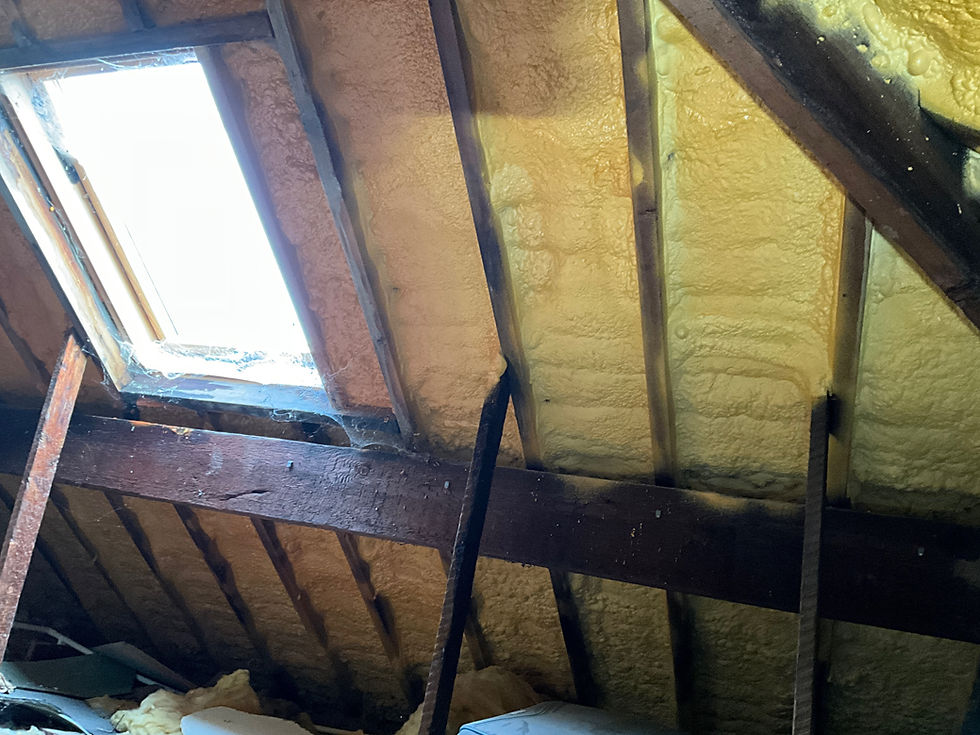
We have encountered numerous cases where removal was described as complete, yet foam remained around eaves, wall heads, rafters, purlins, binders, joist ends, services, masonry junctions and other areas that were difficult to reach. These are not trivial locations. They are often exactly where ventilation is weakest, moisture can accumulate, roof leaks track towards supports, or timber is most vulnerable to concealed deterioration.
2. What condition is the structure now in?
Once the substrate becomes visible, the investigation moves beyond the insulation itself. Our surveyor considers the condition of rafters, purlins, trusses, joists, boards, wall plates and other accessible elements, together with moisture readings, staining, softness, cracking, distortion, fungal growth, decay indicators and evidence of historic or active water entry. A good removal provides access for this assessment. A poor removal can continue to conceal the very defects the process was intended to reveal.
Why the right MRICS Chartered Building Surveyor matters
Where a report is being commissioned for a mortgage lender, insurer or finance provider in connection with a Section 75 claim, the qualification and independence of the surveyor can be critical. Many organisations require, or give significantly greater weight to, an independent report prepared by a suitably qualified Chartered Surveyor. Individual acceptance criteria should always be checked with the organisation requesting the report.
This is one reason AMS SURVEYS is frequently selected for these instructions. Our MRICS Chartered Building Surveyors are not assessing the insulation in isolation. They bring wider knowledge of building pathology, moisture movement, traditional and modern roof construction, timber decay, structural behaviour and intrusive investigation. That wider diagnostic ability is particularly important where the question is not only whether spray foam is present, but what has happened to the building behind it.
Our spray foam reports are independent. AMS SURVEYS does not sell spray foam installation or removal, so our role is to examine the evidence, explain the limitations and provide a reasoned professional opinion. For more detail on our core methodology, see our Spray Foam Insulation Survey service.
The best removal outcome starts with a good survey before removal
The quality of the initial investigation has a major influence on what happens next. Our initial spray foam report does more than record the presence of insulation. It considers the type and extent of foam, the surrounding construction, accessible timber condition, moisture observations, ventilation, roof or floor defects, available installation documents and the areas that cannot be properly assessed while the substrate remains concealed.
Importantly, our initial reports recommend further investigation of hidden areas following removal where this is necessary. Even an intrusive inspection before removal cannot expose every part of a roof or floor. Sampling can provide valuable evidence, but spray foam may extend across large areas and physically prevent direct examination of the surfaces beneath it. Once the foam has been removed, those previously concealed areas should be reviewed as extensively as reasonably possible.
This creates a sensible three-stage process: first, a competent independent survey identifies the concerns and inspection limitations; second, an experienced removal contractor receives a clear technical brief and understands where particular care is required; third, an independent post-removal survey reviews the exposed construction, the quality of the work and any damage that can now be seen.
What we look for during a post-removal spray foam survey
Every building is different, so the inspection is tailored to the construction and the purpose of the report. In a traditional roof, we may be dealing with old rafters, purlins, wall plates, slate battens, membranes, historic leaks and later alterations. Under a suspended timber floor, the critical areas may instead be joist ends, sleeper walls, sub-floor ventilation routes, oversite conditions, damp masonry and services running through a restricted void.
Residual open-cell or closed-cell spray foam, including material left around difficult junctions.
Access achieved by the contractor and whether enough of the original substrate is visible for meaningful inspection.
Timber moisture readings considered alongside the surrounding environment and visual evidence.
Wet rot, dry rot, fungal growth, localised softening, loss of section and other timber decay indicators.
Staining or deterioration consistent with historic condensation, leakage or prolonged moisture exposure.
Distortion, splitting, excessive notching, structural weakening or damage that warrants further structural assessment.
Ventilation routes and whether the original construction can now function appropriately.
Damage caused during removal, including unnecessarily aggressive cutting, scraping or disturbance of surrounding materials.
Moisture meter readings form part of this evidence, but they are not treated as a diagnosis on their own. Readings are interpreted alongside timber species or meter mode, location, environmental conditions, visible defects, construction details and the wider pattern across the building. Where the evidence requires more intrusive or specialist testing, the report explains why.
Case evidence: open-cell spray foam beneath a suspended timber floor
Spray foam concerns are not limited to roof spaces. AMS SURVEYS is increasingly instructed where open-cell foam has been applied beneath suspended timber floors. These voids can be particularly challenging because the inspection area is confined, joist ends and perimeter zones can be difficult to reach, and foam may cover the surfaces needed to assess moisture and decay. Our recent guidance on mortgage lender requests for spray foam floor insulation surveys explains why lender scrutiny is extending beyond roof installations.

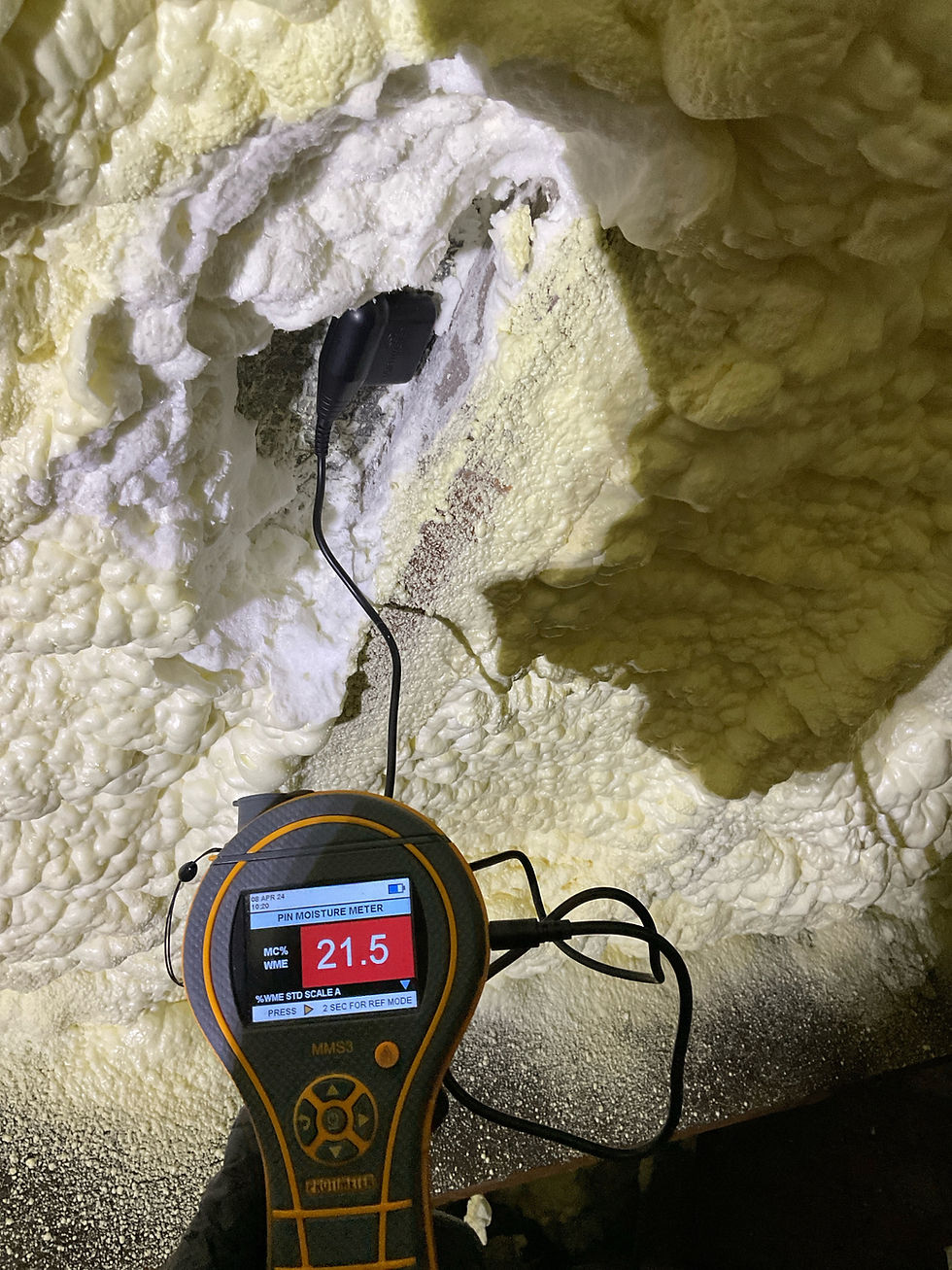
The red 20.4 WME (Wood Moisture Equivalent) indication in this case forms part of a wider pattern of evidence. It demonstrates why a survey must consider both the foam and the condition of the timber around it. Before removal, only representative locations may be available for inspection. The areas behind the foam remain an unresolved limitation until they are exposed.


These photographs show why a removal contractor needs a clear understanding of what the surveyor is trying to achieve. Simply stripping the easiest visible surfaces does not provide the same outcome as exposing the construction sufficiently for an independent review.
What a good spray foam removal outcome looks like
A good removal job leaves the surveyor with substantially better visibility of the original structure. It should allow timber surfaces, junctions and support zones to be inspected rather than leaving extensive remnants that continue to obscure the substrate. The following images show a significantly better underfloor removal outcome, where the floor timbers are exposed and can be assessed more reliably.
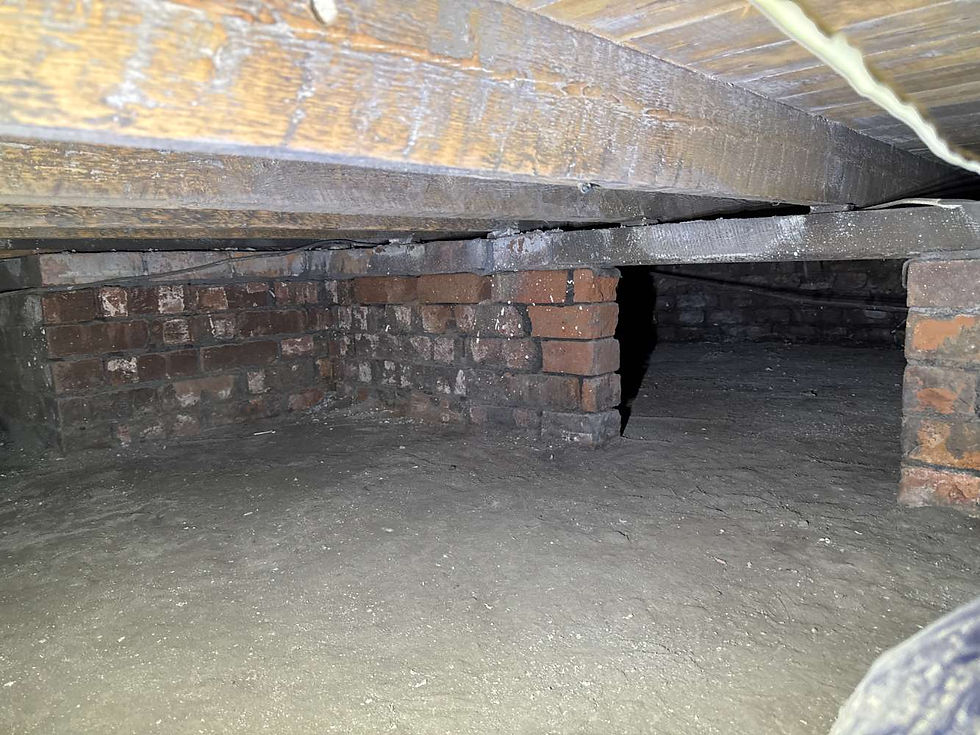


The contrast matters. Once the foam is properly removed, the surveyor can obtain a more representative understanding of timber condition, identify local defects that were previously concealed and determine whether further repair or targeted investigation is needed. This is the real purpose of the post-removal inspection.
Video example: why poor spray foam roof removal needs independent review
Poor removal is one of the recurring issues we encounter. In some cases, the most accessible material has been removed while significant foam remains at junctions and awkward sections of the roof. The short video below shows the extent to which a roof can still be affected after work has been described as removal.
This is why an independent post-removal report should not be replaced by a contractor statement alone. The independent survey considers whether the work has achieved its purpose and whether the previously concealed construction can now be assessed.
Mortgage lenders, insurers, banks and Section 75 claims
The precise evidence required varies between organisations. A lender may want confidence that the insulation no longer prevents inspection of the security. An insurer may need evidence about the cause and extent of timber damage. A bank or card provider considering a Section 75 dispute may need an independent technical opinion on installation defects, consequential damage, proposed remedial work and the outcome after removal.
For these reasons, appointing a suitably qualified and genuinely independent surveyor at the outset can avoid duplicated work later. AMS SURVEYS reports are prepared to explain what is confirmed, what remains uncertain, what inspection limitations apply and what reasonable next step is required. This evidence-led format is designed to be useful to clients and to third parties reviewing the case.
Where damp or timber deterioration forms a significant part of the case, our independent Damp and Timber Surveys and our detailed guide to damp and timber investigations provide further information. Where structural concerns are identified, our Structural Inspections can provide a focused assessment. We also undertake specialist wet rot surveys where timber decay requires further investigation.
RICS and PCA guidance on spray foam insulation
The professional approach to spray foam should be evidence based and independent. The RICS consumer guide to spray foam insulation explains that retrospective spray foam is a significant modification to an existing roof and highlights the importance of independent expertise, moisture control, ventilation and appropriate installation documentation.
The Property Care Association guidance for sprayed foam insulation also addresses concerns around moisture risk, timber condition and the need for a structured investigation protocol. These guidance documents reinforce a principle that is central to our work: the mere presence, or subsequent removal, of foam is not enough information on its own. The building, the hidden structure and the evidence need to be assessed in context.
Why clients across the UK choose AMS SURVEYS
AMS SURVEYS combines national spray foam casework with the disciplines needed to understand what is happening to the building itself. Our clients benefit from independent MRICS Chartered Building Surveyors, a RICS regulated practice, substantial experience in building pathology, damp and timber investigation and structural defects, together with clear communication before and after the inspection.
Hundreds of spray foam investigations undertaken across the UK.
MRICS Chartered Building Surveyors and a RICS regulated surveying practice.
Independent reporting, with no commercial interest in selling spray foam removal.
Experience with both roof and suspended floor spray foam installations.
Building pathology, damp, timber and structural expertise within the same multidisciplinary practice.
Reports prepared for private owners and for cases involving lenders, insurers, solicitors and finance providers.
Client care and direct surveyor support when questions arise after the report is issued.
Our geographical experience ranges from spray foam surveys in London and the South of England to Wales, the North of England and the Scottish Borders. The value of that coverage is not simply geographical. It gives our surveyors a broad evidence base across different building ages, roof forms, timber structures, installation methods, removal standards and moisture conditions.
Frequently asked questions about surveys after spray foam removal
What is a survey after spray foam removal?
It is an independent inspection undertaken after removal to assess whether the foam has been removed adequately and to inspect the newly exposed roof or floor structure for moisture, timber decay, structural defects and other damage that may previously have been concealed.
Why might a mortgage lender ask for a post-removal spray foam survey?
Removal alone does not prove that hidden timbers are sound or that every relevant area has been cleared. A lender or valuer may therefore request independent evidence about the quality of removal and the condition of the exposed structure before deciding whether the property meets its lending criteria.
Can any surveyor carry out a spray foam report?
Different organisations set their own acceptance requirements. For mortgage, insurance and dispute purposes, the independence and professional qualification of the surveyor can be important. Many organisations require, or place greater weight on, evidence from a suitably qualified Chartered Surveyor. AMS SURVEYS uses MRICS Chartered Building Surveyors with specialist spray foam and building pathology experience.
What happens if some spray foam remains after removal?
Residual foam can continue to prevent inspection and may conceal defects at precisely the locations where moisture or decay risk is greatest. The report will identify accessible areas of incomplete removal and explain whether further removal, opening-up or investigation is recommended.
Does removing spray foam prove that the timber is undamaged?
No. Removal improves access, but the exposed structure still needs to be assessed. Timber may show elevated moisture, staining, fungal decay, loss of section, distortion or other defects once the foam is taken away. The condition assessment is therefore as important as checking the quality of removal.
Can AMS SURVEYS inspect spray foam beneath suspended timber floors?
Yes. Our spray foam investigations cover both roofs and floor structures. Underfloor installations can require particular care because access is often restricted and foam may conceal joist ends, ventilation routes, masonry supports and other areas vulnerable to moisture-related deterioration.
Should the same company that removed the foam provide the final report?
A contractor can document its own work, but where independent evidence is required, it is preferable for the post-removal condition assessment to be undertaken by a surveyor who has no commercial interest in the removal. This gives the client and any third party a separate professional opinion on both workmanship and building condition.
Need a spray foam survey before or after removal?
If you need an independent spray foam report for a mortgage lender, insurer, bank, solicitor, Section 75 claim or simply to understand the condition of your property, speak to AMS SURVEYS. Our RICS regulated practice combines MRICS Chartered Building Surveyors with specialist spray foam, damp and timber, building pathology and structural expertise.
Call 0151 314 6650 or email contact@amssurveys.co.uk. You can also request a quote through our specialist spray foam survey service page.