


%204K%20AMS%20SURVEYS%20LOGO.png)

HERITAGE STATEMENTS AND IMPACT ASSESSMENTS IN READING
CLEAR HERITAGE ADVICE FASTER PLANNING PROGRESS IN READING
A clear heritage statement gives the decision-maker a structured explanation of what matters in the Reading asset and how the proposal responds. The local heritage context is a Thames Valley town with medieval origins, abbey remains, Georgian and Victorian buildings, industrial heritage and suburban conservation areas.
DO YOU NEED A HERITAGE STATEMENT OR HERITAGE IMPACT ASSESSMENT FOR PLANNING?
You may need a Heritage Statement where proposed works affect a listed building, conservation area, locally listed historic property or the setting of a heritage asset. The Local Planning Authority may require an assessment of the asset's significance and the impact of the proposed works as part of the planning or Listed Building Consent application.
REVIEWS FROM INDIVIDUALS JUST LIKE YOU

WHEN A HERITAGE STATEMENT IS NEEDED IN READING
Projects affecting historic town-centre buildings, Victorian industrial and railway-related property and Georgian and Victorian houses often require a Heritage Statement because the significance is not limited to the principal elevation. Internal plan form, materials, later phases, adjoining structures and the contribution of the wider Reading townscape may all influence the assessment.
Instructions can range from a focused statement for reuse of a former industrial building to a fuller Heritage Impact Assessment for repair and adaptation of a church, school or civic asset. The evidence is proportionate to the level of likely effect, with the design team given clear advice on avoidance, reduction, mitigation and enhancement before submission.
Applications can involve historic town-centre buildings, Victorian industrial and railway-related property, Georgian and Victorian houses and schools, churches and civic buildings, where development pressure, fragmented historic fabric and the need to integrate modern use, energy upgrades and servicing without eroding character may influence the acceptability of change. AMS Surveys prepares Heritage Statements and Heritage Impact Assessments for owners, architects and developers who need a defensible assessment of significance, setting and likely effect. The report is scaled to the proposal, whether it concerns reuse of a former industrial building, alteration of a conservation-area house or a wider development affecting the asset’s surroundings. The main Heritage Statements hub remains the complete explanation of methodology and service scope, while this page concentrates on the planning and conservation issues most relevant to Reading and nearby areas including Wokingham, Bracknell, Newbury and Maidenhead.
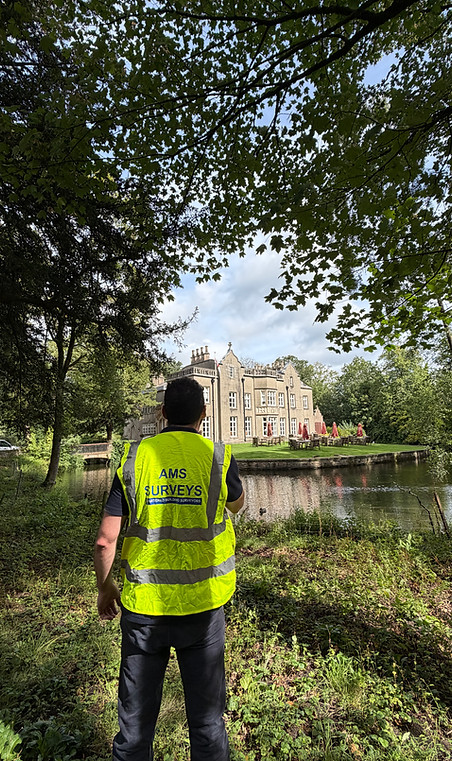

WHAT A READING HERITAGE STATEMENT CAN INCLUDE
The scope for a Reading Heritage Statement or Heritage Impact Assessment is matched to the asset and the proposal.
Review of designation, available local records, historic mapping and the information supplied for the application
Identification of significant materials and fabric, including historic brickwork, stone dressings and slate roofs
Analysis of how the proposal changes historic roof forms, Georgian interiors and school and church fittings
Reasoned consideration of scale, reversibility, visibility, loss, setting and cumulative change
Practical recommendations for design amendments or supporting evidence where the initial scheme creates avoidable harm
A structured report suitable for coordination with the planning, design and listed building consent submission
The completed report should make the significance, effects and mitigation understandable without duplicating the architect’s design statement or the technical detail of a building survey.
QUICK BOOKING AND TURNAROUND
Our Heritage Consultants operate across England and Wales, with strong regional coverage in Liverpool, Manchester, Cheshire, Lancashire, Derbyshire, Shropshire and North Wales.
Bookings are subject to availability, which may change frequently. Clients can typically make reservations as soon as possible to minimise any potential delays; we recommend making your bookings promptly. We can discuss timescales with you, particularly where planning departments have issued a deadline for submission.
HERITAGE STATEMENT FAQs
What Is A Heritage Statement Or Heritage Impact Assessment?
A Heritage Statement or Heritage Impact Assessment explains the significance of a historic building, conservation area or other heritage asset and assesses how proposed works could affect its character, appearance and heritage significance. The assessment may consider listed buildings, locally listed buildings, conservation areas, scheduled monuments and the setting of nearby heritage assets.
Why Do I Need A Heritage Statement Or Heritage Impact Assessment?
A Heritage Statement or Heritage Impact Assessment may be required to support a planning or Listed Building Consent application where proposed works could affect a designated or non-designated heritage asset. It helps the Local Planning Authority understand the significance of the heritage asset, the potential impact of the proposals and how that impact has been avoided, minimised or appropriately mitigated.
When Is A Heritage Statement Or Heritage Impact Assessment Required?
They are commonly required for alterations, extensions, conversions, repairs or development affecting listed buildings, conservation areas and other historic properties. They may also be required where development is close to a heritage asset and could affect its setting. The exact scope will depend on the property, the proposed works and the requirements of the Local Planning Authority.
Who Prepares A Heritage Statement Or Heritage Impact Assessment?
A Heritage Statement or Heritage Impact Assessment should be prepared by someone with appropriate knowledge and experience of historic buildings, architectural significance and the planning system. AMS SURVEYS provides heritage assessments for residential, commercial and historic properties, combining building surveying expertise with an understanding of building conservation, traditional construction and heritage significance.
What Is The Difference Between A Heritage Statement And A Heritage Impact Assessment?
The terms are sometimes used interchangeably, although the required level of detail can vary. A Heritage Statement will typically identify and explain the significance of the affected heritage asset, while a Heritage Impact Assessment generally provides a more detailed assessment of how a proposed development or alteration may affect that significance and its setting.
Who Pays For A Heritage Statement Or Heritage Impact Assessment?
The cost is normally paid by the property owner, developer or applicant seeking planning permission or Listed Building Consent. The scope and fee will depend on the significance of the heritage asset, the complexity of the proposals, the extent of research required and whether a site inspection is necessary.
HERITAGE PLANNING CONSIDERATIONS FOR READING
The historic environment of Reading includes historic town-centre buildings, Victorian industrial and railway-related property, Georgian and Victorian houses and schools, churches and civic buildings. These buildings may be designated, locally recognised, situated in a conservation area or relevant because a nearby proposal changes their setting. A useful statement separates the asset’s broad interest from the specific significance of the part affected by the application.
This distinction is important where development pressure, fragmented historic fabric and the need to integrate modern use, energy upgrades and servicing without eroding character. A proposal may preserve the principal elevation yet alter an internal sequence, remove evidence of earlier use, interrupt a view or introduce a material that performs poorly beside historic fabric. The assessment should therefore consider design, use, repair, setting and cumulative change together.
For Reading projects, we combine site observations, historical sources and the current design information into a concise evidence chain. The conclusion does not rely on generic statements that a proposal is sympathetic. It identifies the actual consequences, explains design responses and records any mitigation. Internal links to Historic Building Surveys, Historic Building Recording and Heritage Consultants give clients a direct route to the related evidence services without weakening the Heritage Statements hub as the parent authority.
The Abbey Quarter, Thames and Kennet corridors, railway expansion and Victorian industrial growth sit alongside suburban conservation areas, so heritage value may be dispersed between archaeological remains, street form and later transport-related buildings. A proportionate report may need to connect fragmented evidence across the site, including former industrial plots, waterways, railway infrastructure or the setting of surviving historic buildings.

REGULATED AND PARTNERED WITH


